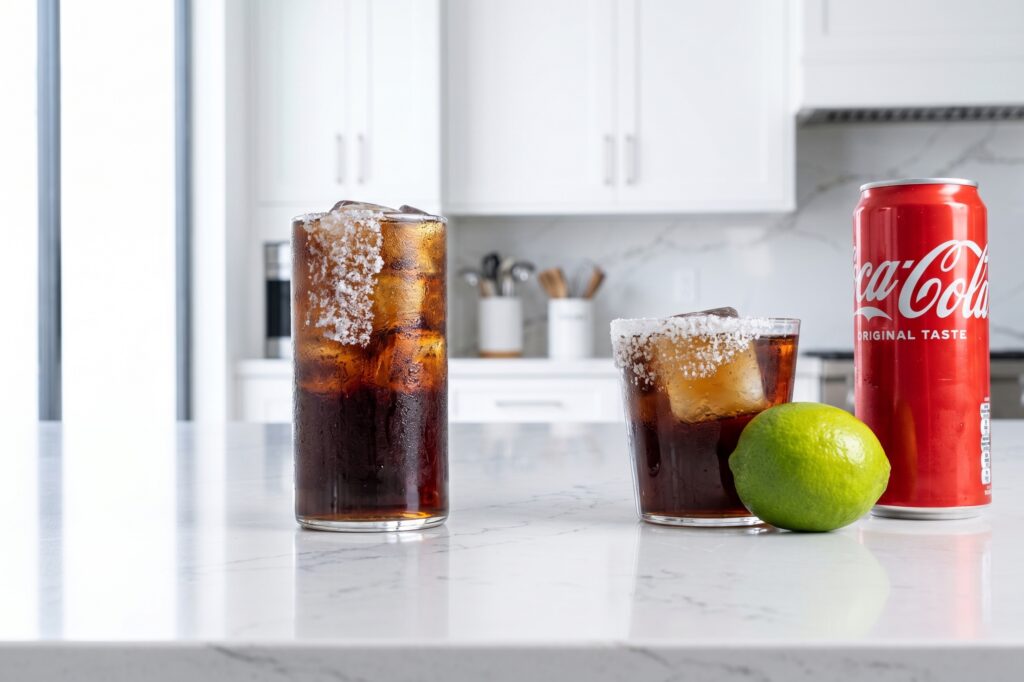


Few cocktails have moved as fast as the Carajillo has recently, but the drink itself is far older than any trend. At its core, the classic Carajillo it’s just two ingredients: coffee and vanilla liqueur. That simplicity is exactly why it’s lasted this long, and why it’s so easy for bartenders to reshape it into something new, like with the case of the Carajillo Old Fashioned.
The Carajillo Old Fashioned traces back to Sean O’Connor-Combes, who built the riff in San Diego in 2022. It later appeared in The Madrusan Cocktail Companion in a slightly simplified form, which is closer to the version that spread from there using Licor 43, coffee liqueur, cognac, and rye. The cocktail was then picked up by creators like Leandro from the Educated Barfly’s and Jordan Hughes, known as the High Proof Preacher, who put his own spin on it using reposado tequila and a combination of orange and cacao bitters.
Fans of the classic Carajillo might find these variations interesting but not too familiar to the modern take on it, but a small look at the history of the cocktail will show that going the Old Fashioned route is closer to its origins. While contested, one story places the origins of the Carajillo in 19th-century Spain, where transport workers short on time combined their morning coffee and liquor into a single drink.
Another account traces the Carajillo to Cuba, where coffee and rum were mixed to give plantation workers a bit of courage, or coraje, the word many believe the name descends from. Either way, it sits in the same family as Irish Coffee and Italy’s caffè corretto, a drink built to solve the same small problem in a few different countries at once.
But to fully understand how the transformation of the Carajillo took place, we first need to make one to identify its elements.

The Carajillo Old Fashioned
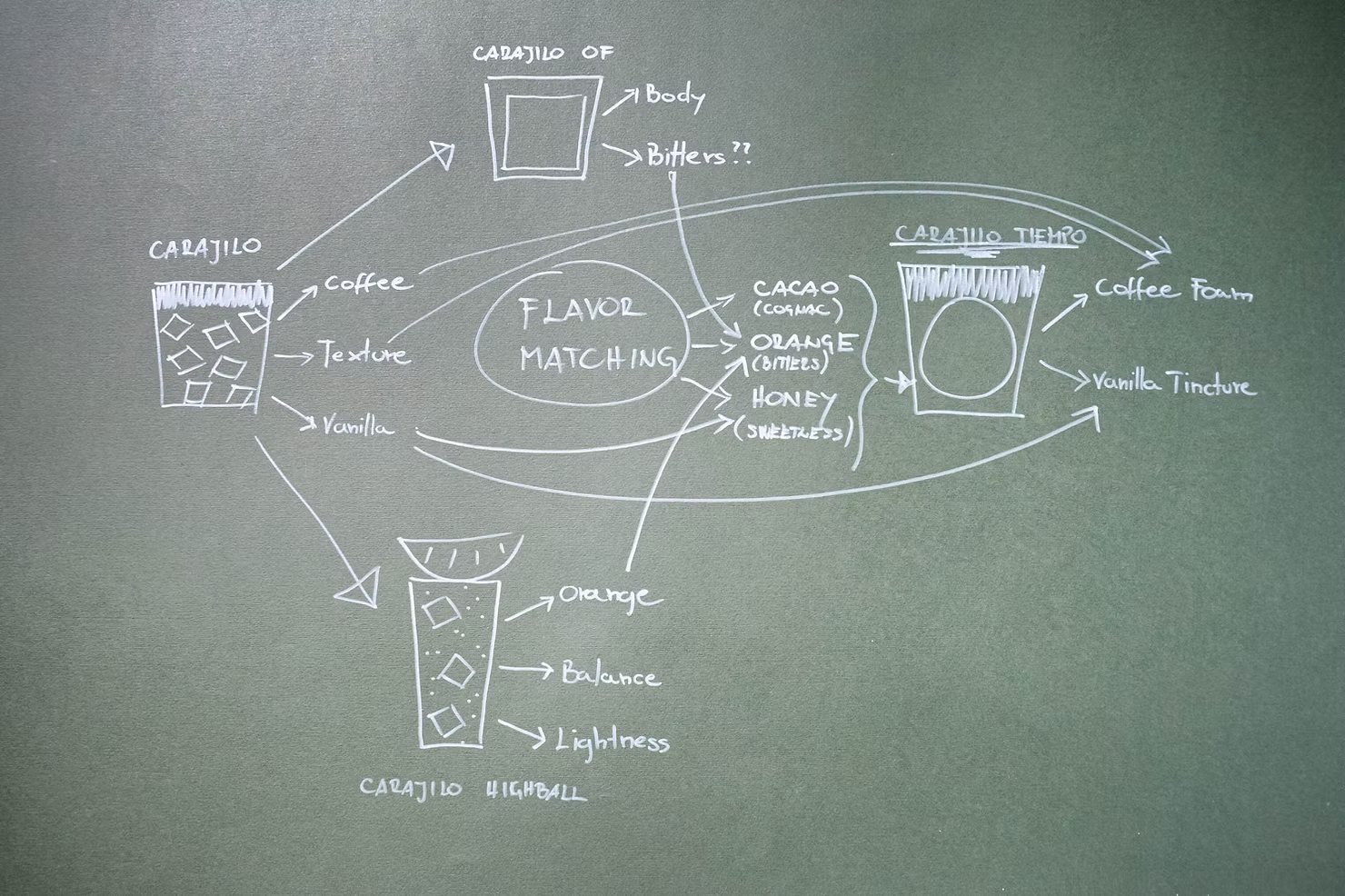
Here the main modifier to keep in mind was the addition of bitters to make it a true Old Fashioned, and to preserve a rich texture without having to shake the drink, the coffee was replaced with coffee liqueur. The remaining ingredients connect to the origins of the Carajillo as well, making this a cohesive cocktail. What makes the recipe travel so well is that it’s simple to replicate but flexible enough to make your own, which is a large part of how a working-class coffee drink turned into a full-blown cocktail trend.
Carajillo Old Fashioned
- 30mL · 1oz Cognac
- 30mL · 1oz Rye Whiskey
- 7.5mL · 0.25oz Licor 43
- 7.5mL · 0.25oz Coffee Liqueur
- Angostura Bitters (optional)
- Coffee Beans Garnish
- Add the ingredients to a chilled mixing glass with plenty of ice.
- Stir until properly chilled and diluted. For added coffee notes, drop a few whole coffee beans into the mixing glass for the stir.
- Strain over a large, clear ice cube.
- Finish with three coffee beans on top, which has become close to standard for this drink.
The Carajillo Highball
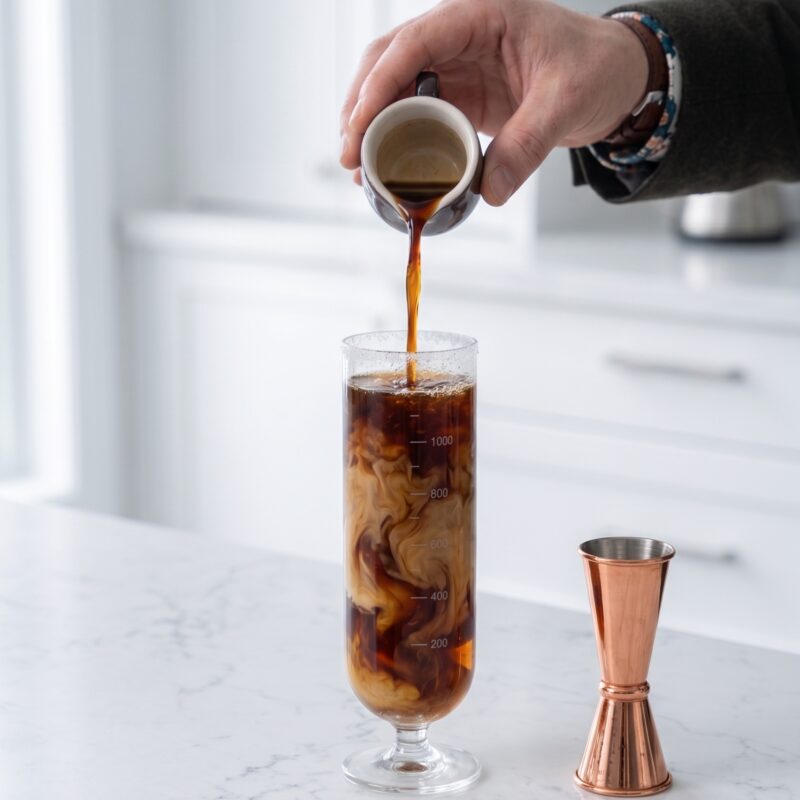
The move from Carajillo to Carajillo Old Fashioned made sense once you saw it. From there, the natural next question was whether the same flavor profile could work as a highball too, and after testing a handful of ratios, this is the version that stood out, focusing on the light texture of the shakeado Carajillo instead.
Carajillo Highball
- 30mL · 1oz Licor 43
- 30mL · 1oz Reposado Tequila
- 60mL · 2oz Soda Water
- 1 shot Espresso
- Orange Wedge and Salted Rim Garnish
- Rim a well-chilled highball glass with salt, then fill it with ice.
- Add the Licor 43, tequila, and espresso.
- Top up with soda water, using the coldest you have on hand.
- Stir gently, then finish with an orange wedge on top of the glass.
The Carajillo Tiempo
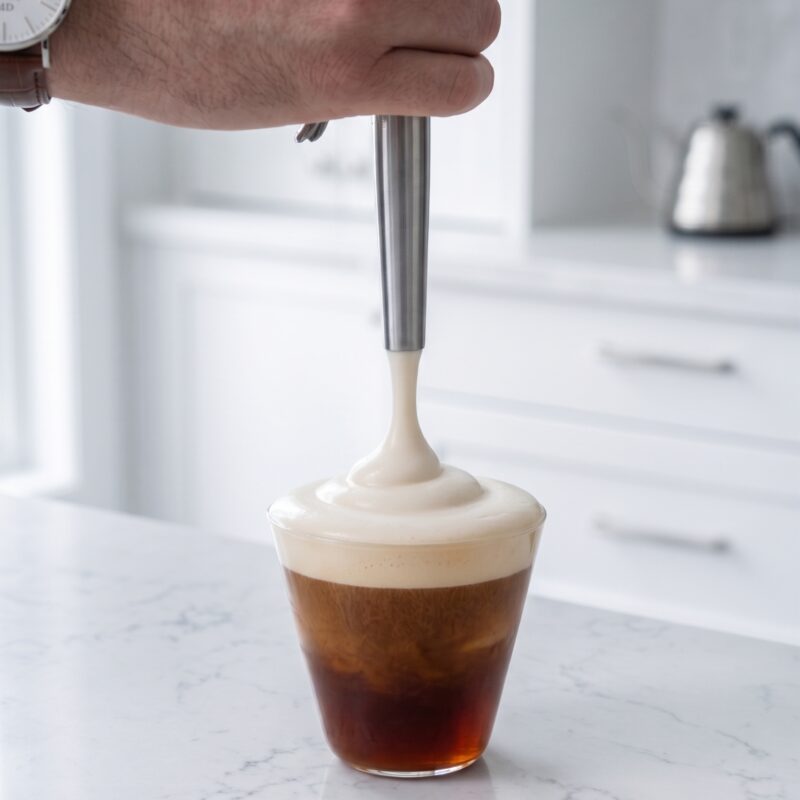
At this point, the building blocks are clear: coffee, vanilla, and texture, in some combination, work across nearly any format. The Carajillo Tiempo takes those same blocks and stacks them into something more layered, and notably, it’s the one version here that leaves out Licor 43 entirely, replacing it with a few components built from scratch.
For sweetness, a honey syrup rounds out the final build. The Cocktail Universe’s calculators can handle the sugar ratio for you if you’re building your own batch.
Vanilla Tincture
- 3g Vanilla Bean (split and scraped)
- 75mL · 2.5oz 100 Proof Vodka
- Split the vanilla bean lengthwise and scrape out the seeds for maximum extraction.
- Seal the bean, seeds, and vodka together in a sous vide bag.
- Hold at 60°C / 140°F for about 3 hours. The same infusion takes two weeks at room temperature in a sealed jar.
- Once cooled, strain through a coffee filter.
Cacao Cognac
- 180mL · 6oz Cognac
- 9g Cacao Powder
- Stir high-quality cacao powder into the cognac, either by hand or with a magnetic stirrer, for about 10 minutes.
- Strain through a coffee filter until the liquid runs completely clear.
- Bottle.
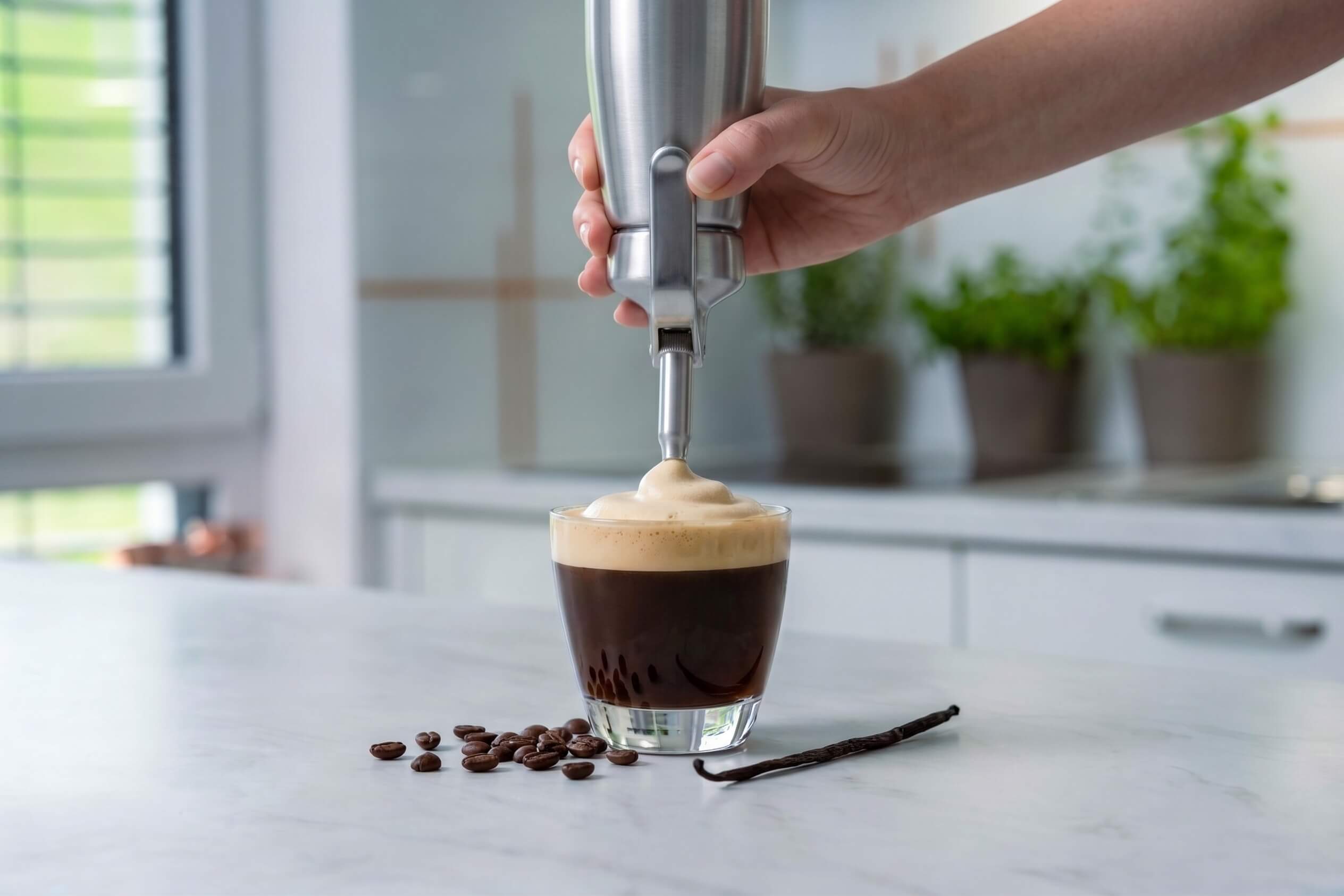
Coffee Foam
- 30g Ground Coffee
- 400g Hot Water
- 300mL Strong Brewed Coffee
- 30mL · 1oz Simple Syrup
- 120mL · 4oz Vegg White
- 1 dash Saline Solution
- 1 N₂O Cartridge
- Brew a stronger-than-usual pour-over, since the coffee needs to carry its own flavor through the foam.
- Once it’s fully chilled, combine it with the simple syrup, foaming agent, and a dash of saline solution, then blend.
- Load the mixture into a whipping siphon and charge it with one N₂O cartridge.
- Shake well and chill.
Carajillo Tiempo
- 30mL · 1oz Cacao Cognac
- 30mL · 1oz Rye Whiskey
- 7.5mL · 0.25oz Honey Syrup
- 4 dashes Orange Bitters
- 1.5mL Vanilla Tincture
- 2 drops 20% Saline Solution
- Coffee Foam Garnish
- Add everything except the coffee foam to a chilled mixing glass with plenty of ice.
- Stir until well chilled and diluted.
- Strain over a large, clear ice cube.
- Finish with the coffee foam on top, for aroma, flavor, and texture in every sip.
A good idea is where every trend starts, but it’s rarely enough on its own. It also needs to be presented in a way people want to share, and ideally, a bit of a wow factor. That combination is what carried Super Juice, the Parmesan Espresso Martini, the Batanga, and now the Carajillo, from bar programs into everyone’s feed. Cheers!
Online tools.
Get access to professional calculators, AI assistance and practical tools built to make cocktail development faster and easier.