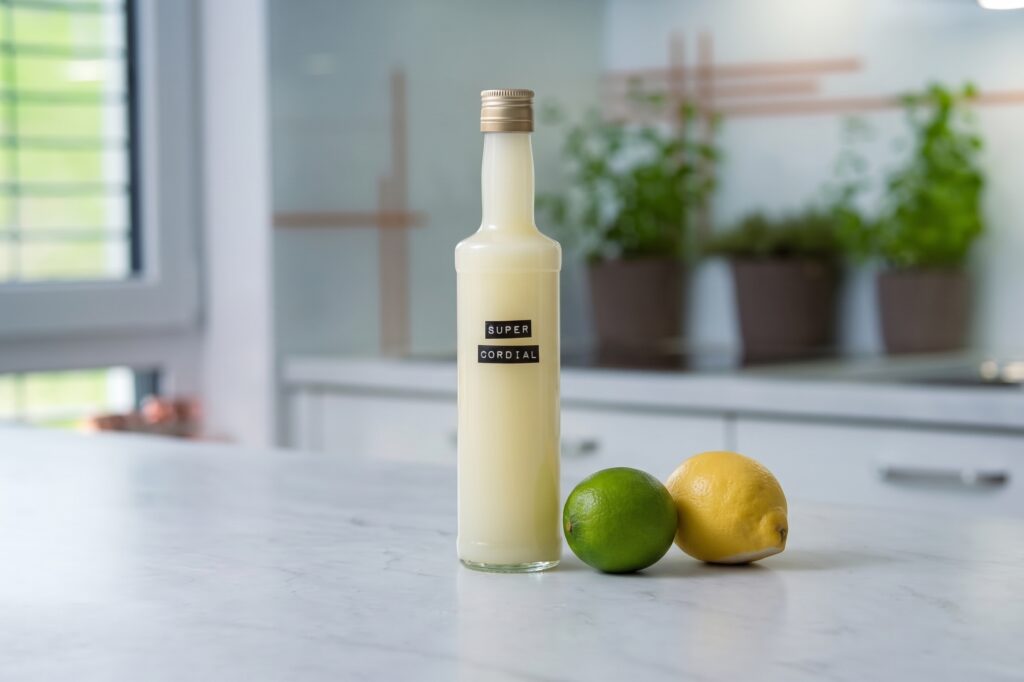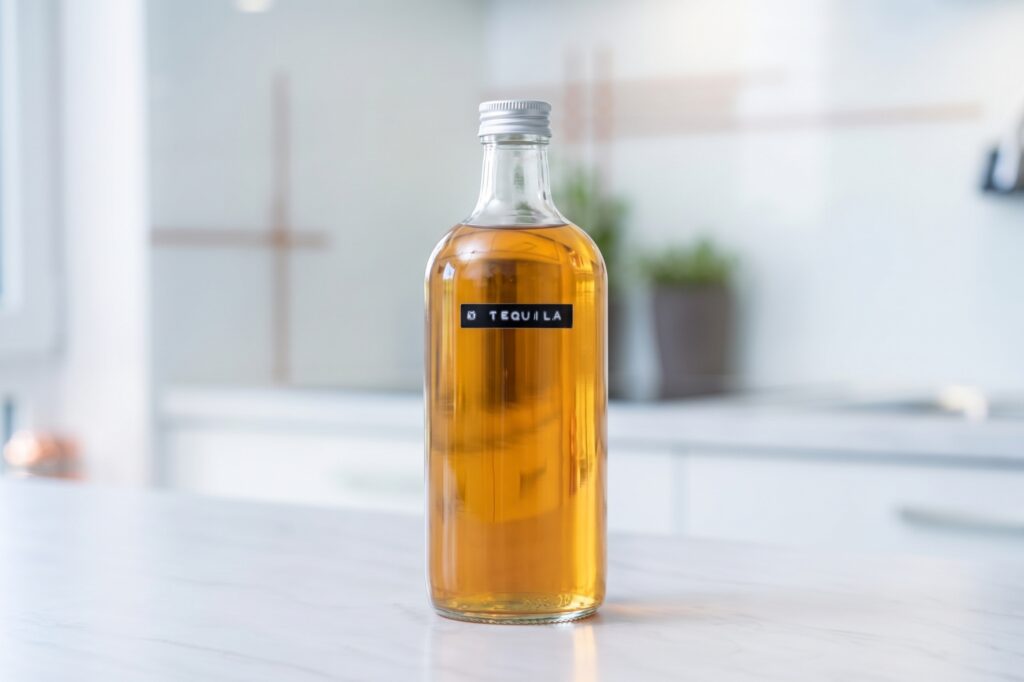



Good bartending isn’t only about recipes, it’s also about making small decisions to make the work behind the bar easier, giving us time to elevate our guests’ experience instead. This is why I have compiled 20 techniques spanning flavor, ice, tools, and cleanup hacks compiled across 20+ years of experience. Most of them just take a few minutes to apply, but the more techniques you learn, the more the time saved will compound. Let’s get started.
Flavor and Balance
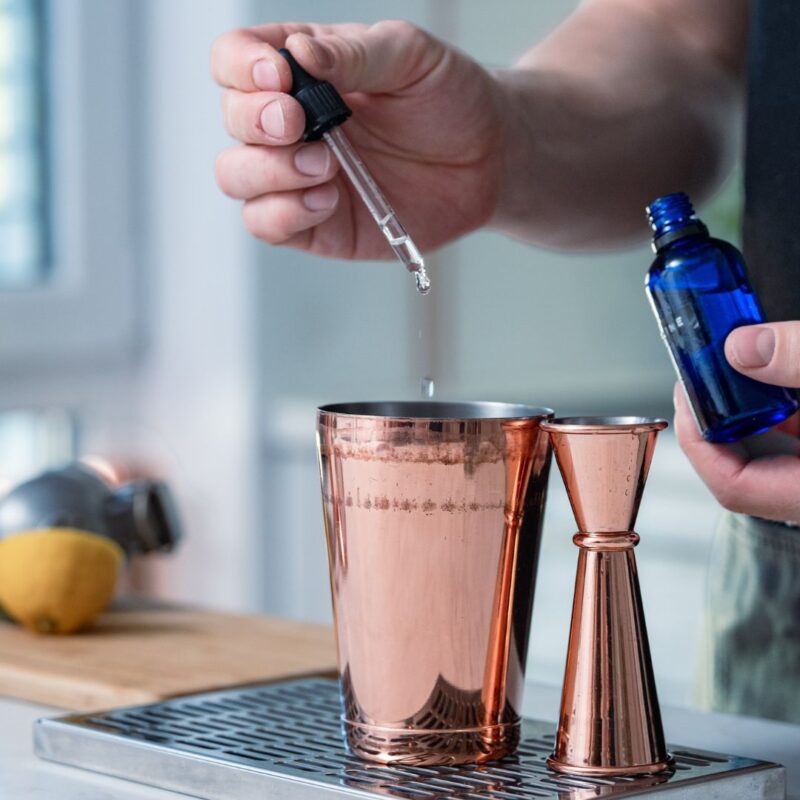
Boost the flavor of your cocktails and mocktails with saline solution. Just like in cooking, salt enhances sweetness and acidity and tones down bitterness, rounding out flavor and making it pop. To make saline, dissolve 20g of salt into 80g of water to make a 20% saline solution, then add a couple of drops to almost any cocktail. But sometimes just saline isn’t enough.
If you’re making an ingredient like a cordial or a shrub, or even a batched cocktail, you can use baking soda if the end result is too tart. This can neutralize some of the acid, adjusting the entire flavor profile without having to add more water, sugar, or other ingredients. Just make sure to have a large container to do this in, as the mixture will bubble and rise when the baking soda gets added.
Color Without Artificial Ingredients
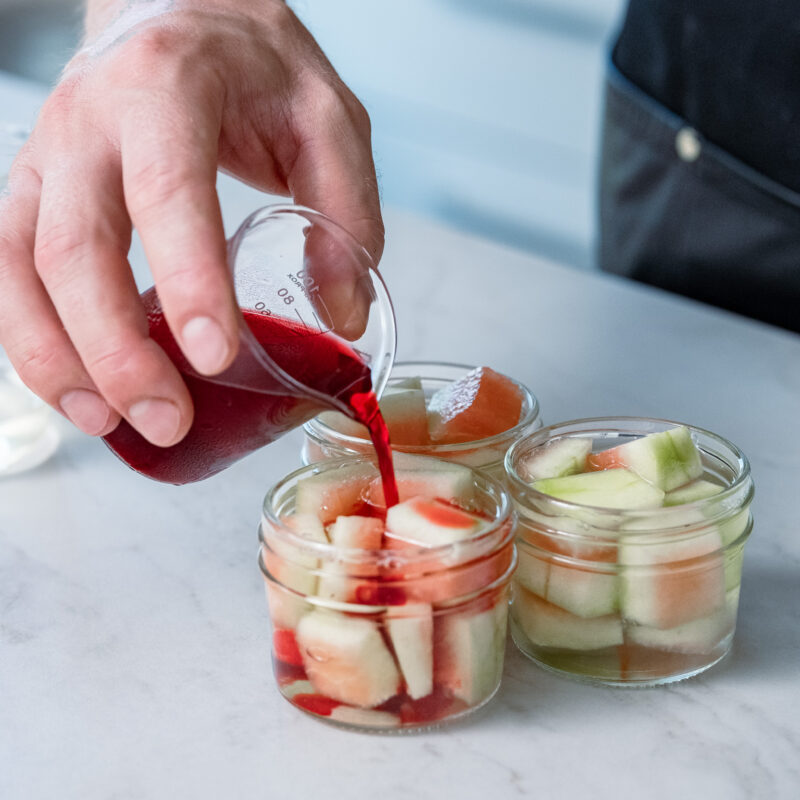
You can color ingredients naturally instead of reaching for artificial dye. Hibiscus or beetroot juice and powder produce red. Turmeric, carrot juice, or saffron produce yellow and orange. Blue and green spirulina both work for each one of those shades, with blue carrying less of spirulina’s typical vegetal taste. Alternatively, matcha powder is another solid green option. All of these work in small quantities too, adding color with barely any change to flavor.
Ice and Temperature
Chill glassware before the cocktail ever touches it. A cold glass keeps a well-chilled drink from warming up, which is especially important for drinks served neat, as well as drinks like egg-white sours where the egg can start to smell if the drink warms up.
Next, when working with clear ice you can use a torch to temper it faster. Both bar and home freezers keep the ice way colder than your freshly chilled cocktail, meaning that the ice will crack on contact with the drink. Waiting for the ice to temper naturally works of course, but a quick, even torch on all sides speeds it up considerably. Keep the flame moving and brief, since over-torching will also crack the ice, ruining the clear look.
Now, instead of buying premium ice, you can also make clear ice at home without specialty equipment. A simple insulated cooler works as a directional-freezing chamber, but you can also build one by insulating a plastic container with bubble wrap and styrofoam. This last approach is great as you can adjust the size of the container to your freezer.

Precision and Efficiency
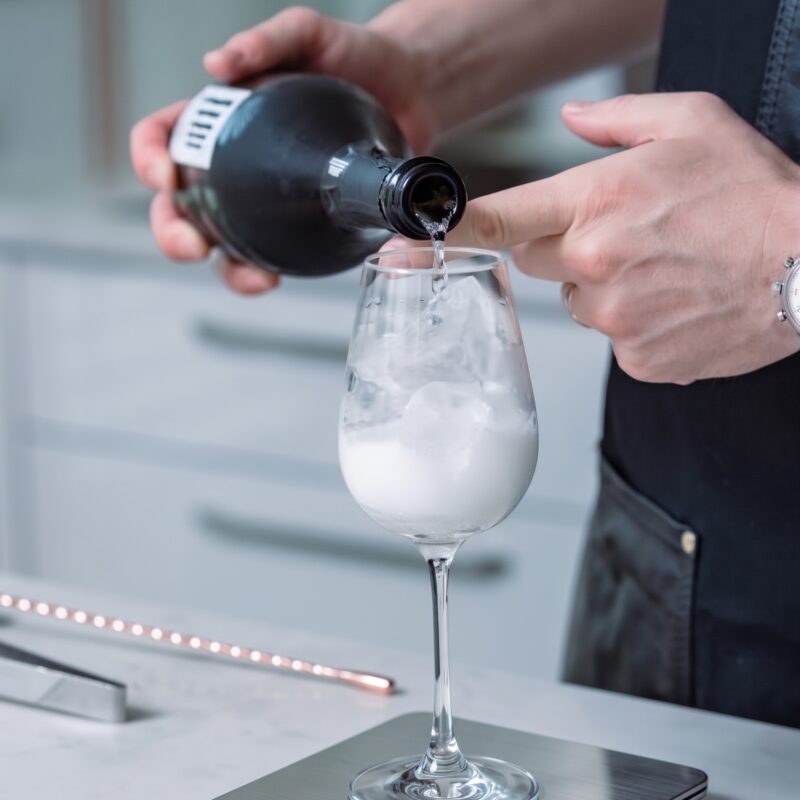
Measure carbonated ingredients with a scale, never a jigger. Bubbles make volume measurements inconsistent, and pouring through a jigger knocks out a lot of the carbonation too. Your next Aperol Spritz will thank you, and once you have a visual feel for the amounts, you’ll be able to build many cocktails with the same level of quality faster.
For maximum consistency, you can also go with my favorite technique: batching. A batch or punch bowl means fewer individual pours, which means fewer chances to over- or under-pour, and it frees up time to spend with guests instead of behind the bar all night.
Useful Bar Tools
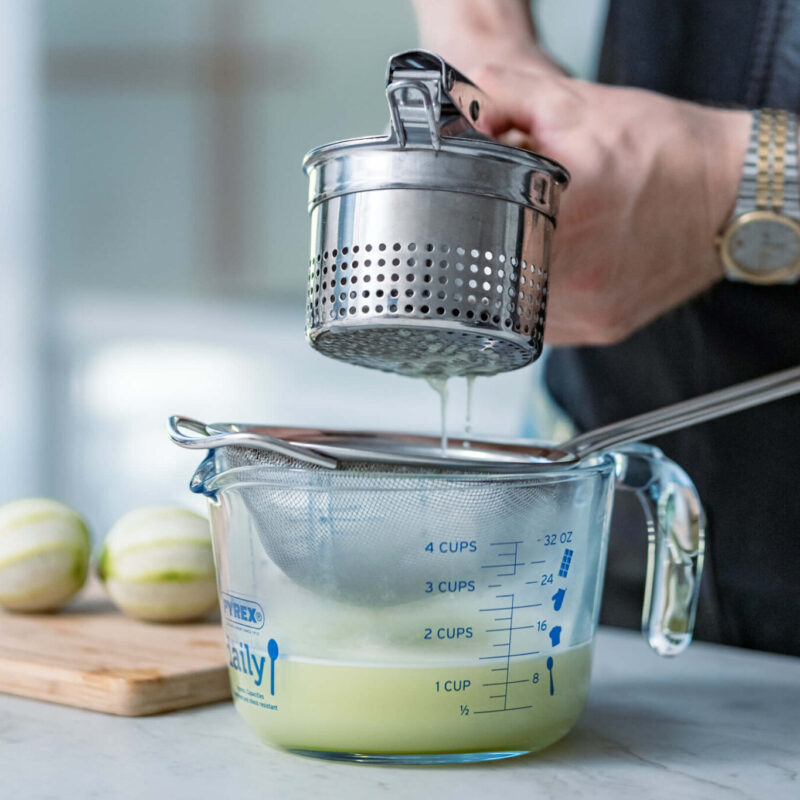
Use a juicer instead of an infusion for maximum flavor and color. Ingredients like pineapple, melon, and ginger give up more flavor and a brighter color through juicing than through steeping. And if you want to concentrate these flavors even more, you can also freeze and partially thaw out the juice – a technique known as cryo- or freeze-concentration. Yield is important too, and you can use a potato ricer to maximize it. Just press ingredients or filters through it to get those last few stubborn drops of juice out.
When it comes to safety, use a cheese slicer to peel citrus. Cheese slicers, built as a single guarded piece of metal, are considerably safer than a standard peeler and tend to produce wide, evenly curled peels. This is a technique bartender Jeffrey Morgenthaler picked up from fellow bartender Jared Miller.
Finally, use a double-spout espresso portafilter to split-pour two cocktails at once. It’s largely a presentation flourish, but a striking one for a cocktail like a Revolver.
Working With Egg Whites
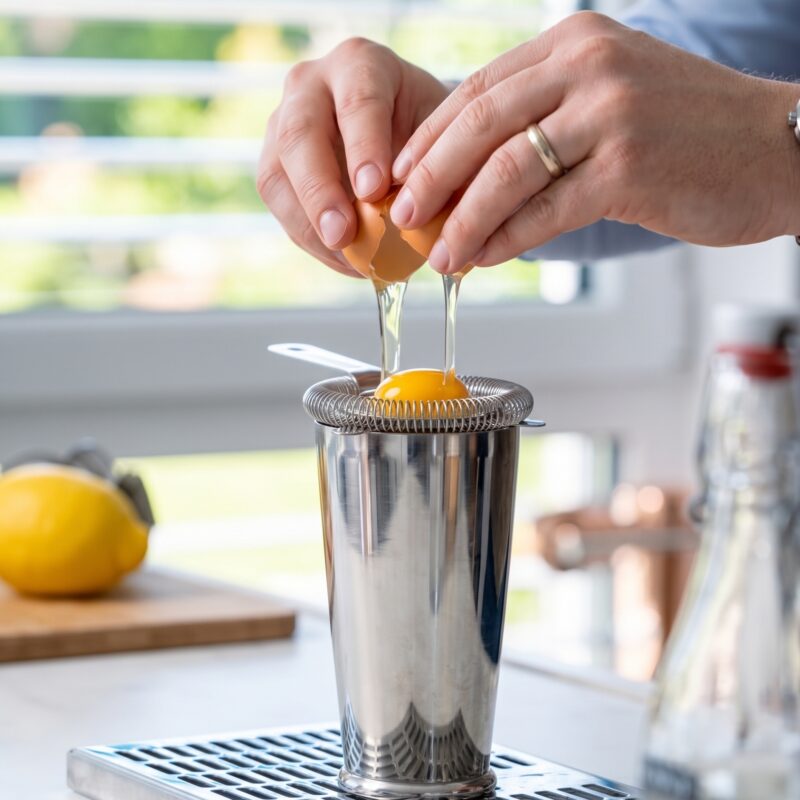
Use an upside-down Hawthorne strainer to separate egg whites from yolks. This is a more reliable method than trying to pass the yolk between shell halves, and it frees up your hands to keep working on other drinks.
Also, break apart the egg white before measuring it. The proteins that hold the white together also make it hard to portion accurately. Breaking them up first, with a fork or a milk frother, makes the white pourable and easy to measure like any other liquid ingredient.
Using a milk frother is also a great way to replace the dry shake. This way you still emulsify the egg and aerate the drink without the risk of a shaker seal failing under pressure, which a dry shake always carries. Afterwards just add ice and shake as normal.
Bottle Maintenance
While hot water and soap, rubbing alcohol, or a razor blade can all work on stubborn labels, a 1:1 or 2:1 mix of baking soda and cooking oil handles the residue other methods leave behind. Rub it onto the glue, let it sit for 10 to 20 minutes, then scrub and wash with hot water and dish soap.
As for the inside of the bottles, you can use a small chain or a handful of pebbles and some water to get perfect results without special equipment. Dry them thoroughly afterward so they’re ready for next time, and as long as you don’t have hard water in your taps, you should have spot free bottles. This is something that’s especially useful to know if you use a sous vide.
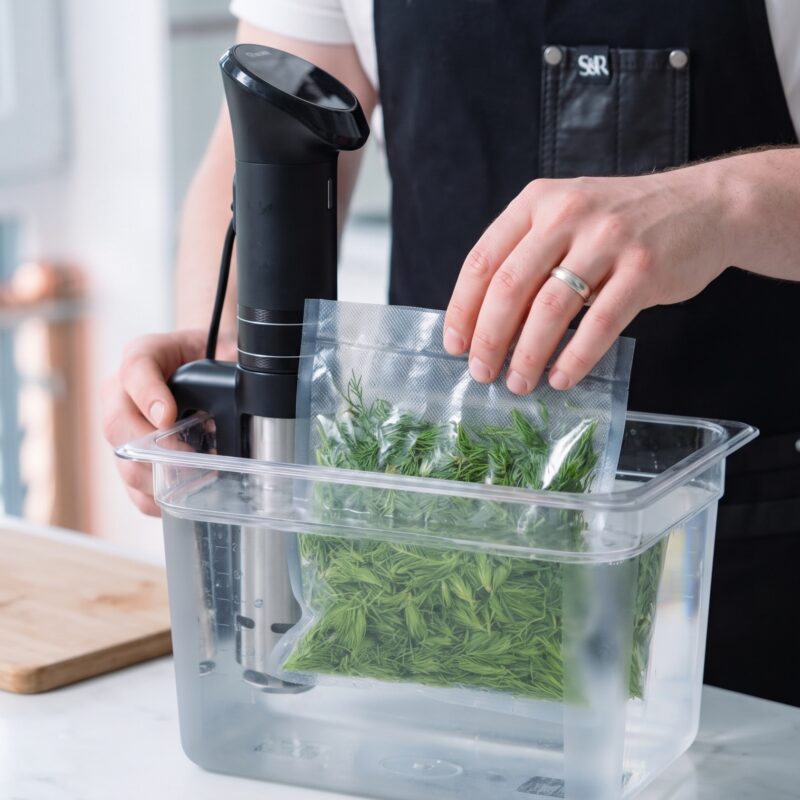
Hard water leaves mineral deposits, mostly calcium carbonate, on heating elements over time. This can make your sous vide less effective, so prevent it by adding vinegar to a sous vide bath to prevent limescale. Calcium carbonate doesn’t dissolve in water on its own, but the acetic acid in vinegar breaks it down, keeping a sous vide cooker clear of buildup.
Most of these techniques take a single try to stick. The ones worth keeping are the ones that solve a real, repeated annoyance, whether that’s a cracked ice cube, a stubborn label, or a dry shake gone wrong.
Master the craft.
Build real bartending skills through structured, professional courses designed to take you from fundamentals to advanced techniques.
Frequently
asked questions.
Here are the most frequently asked questions and answers.
What is The Cocktail Universe?
The Cocktail Universe is an online platform designed for bartenders who want to improve their skills, creativity, and efficiency behind the bar. It offers a range of professional cocktail courses covering modern mixology techniques, from foundational skills to advanced methods like clarification, batching, and flavor balancing.
In addition to structured bartending courses, The Cocktail Universe provides powerful digital tools such as cocktail calculators to help you create, standardize, and scale recipes with precision. You also get access to an AI-powered assistant trained on Kevin Kos’s expertise, allowing you to ask detailed questions about cocktail techniques, ingredients, and bar workflows.
Who is The Cocktail Universe for?
The Cocktail Universe is designed for anyone who wants to improve their bartending skills, from passionate home enthusiasts to professional bartenders. Whether you are a beginner learning the fundamentals, an intermediate bartender refining your technique, or an experienced professional exploring advanced mixology methods, the platform provides valuable education at every level.
With structured cocktail courses, practical bartending tools, and expert guidance, The Cocktail Universe helps you develop better skills, improve consistency, and elevate the quality of your drinks behind the bar.
Is this cocktail course for home bartenders, beginners, or professional bartenders?
This cocktail course is designed for all levels, including home bartenders, beginners, and professional bartenders. Whether you are just starting out or already working in a bar, the content is structured to help you improve your skills, learn modern mixology techniques, and create better cocktails with consistency.
The training covers both fundamental concepts and advanced bartending methods, making it valuable at every stage of your bartending journey.
What will I learn in an online mixology course?
Our online mixology courses are structured in tiers, allowing you to progress from fundamental bartending skills to advanced, professional-level techniques.
In the beginner course, you will learn the essentials of cocktail making, including how to prepare simple syrups, mix classic cocktails, and properly shake and stir drinks. This level builds a strong foundation for anyone starting their bartending journey.
In the aspiring mixologist course, you will move into more advanced techniques such as creating flavored syrups, super juice, tinctures, and bitters. You will also learn fat washing and advanced garnishing, helping you develop more creative and refined cocktails.
In the professional course, you will dive deep into modern bartending systems and high-level techniques used in top bars. This includes working with tools like siphons, CO2 carbonation systems, pH meters, and refractometers, as well as techniques such as cryo concentration, rapid infusions, and advanced batching. You will also learn how to create cordials, vermouths, and professional-grade syrups, along with flavor pairing strategies.
These skills are designed not only to elevate your cocktail quality, but also to help you improve efficiency, create signature products, and monetize your work as a bartender.
Can I learn bartending online without working in a bar?
Yes, you can absolutely learn bartending online without working in a bar. Our cocktail courses are designed to help you build real skills from home, including mixing drinks, understanding flavor balance, and mastering essential bartending techniques.
Whether you want to create a professional-level home bar, host friends and family, or simply improve your cocktail-making skills, the training gives you everything you need to get started and progress confidently at your own pace.
Which course level is right for me: Beginner, Aspiring Mixologist, or Pro Mixologist?
The right course level depends on your current bartending skills and experience. Whether you are just starting out, already comfortable with cocktail basics, or working at a professional level, Cocktail Universe offers a tier that matches your needs.
To help you choose, you can use our built-in chatbot, which will ask you a few quick questions and recommend the most suitable course level for you. This ensures you start at the right stage and get the most value from your mixology training.
Do I need any previous bartending or cocktail knowledge to start?
No previous bartending experience or cocktail knowledge is required to start. The beginner course is designed for complete beginners and covers all the essential skills you need, from basic techniques to making classic cocktails.
As you progress, you can move into more advanced mixology courses that build on this foundation and introduce professional bartending techniques.
Do I need special cocktail equipment or ingredients to follow along?
No special cocktail equipment or ingredients are required to start, especially at the beginner level. The course is designed to help you get started with tools and ingredients you already have at home.
You will also learn how to substitute professional bartending tools with simple household items, making it easy to follow along without investing in expensive equipment right away. As you progress, you will be introduced to essential cocktail tools and ingredients that can help you further improve your skills and efficiency.
Are the lessons video-based and practical?
Yes, all lessons are video-based and designed to be highly practical. You can follow along step by step and recreate each cocktail or ingredient at home.
In addition to video tutorials, you also get detailed written recipes, tool lists, and supporting materials. These include background information and cocktail history to help you better understand ingredients, techniques, and flavor development.
The courses are built for real-world application, so you can immediately practice what you learn and improve your bartending skills with every lesson.
How much of the course is hands-on practice vs. theory?
The majority of the course is focused on hands-on, practical bartending. You will actively make cocktails, prepare ingredients, and apply techniques that can be easily replicated at home or behind the bar.
There is also a small but important amount of theory included, covering topics such as cocktail history, flavor balance, and the fundamentals of mixology. This helps you understand not just how to make drinks, but why techniques and ingredients work.
The balance ensures you build real, usable skills while developing a deeper understanding of modern bartending.
Can this course help me become a professional bartender?
Yes, this course can help you build the essential skills and knowledge needed to become a professional bartender. You will learn cocktail techniques, ingredient preparation, and modern mixology methods used in real bar environments.
However, becoming a professional bartender also requires hands-on experience in a working bar. We recommend combining these online cocktail courses with real-world practice, as this is where you develop speed, consistency, and service skills.
Together, practical bar experience and structured mixology training give you the strongest foundation to grow into a confident and skilled professional bartender.
How does the cocktail learning chatbot help me?
The cocktail learning chatbot is designed to support you in every stage of creating and improving cocktails. It can help you find the right ratios for balanced drinks, suggest new cocktail ideas, and give you inspiration based on ingredients, styles, or flavor profiles.
You can also use it to scale cocktail recipes up or down, making it easier to batch drinks or adjust servings with precision. For more advanced use, the chatbot can assist in building seasonal cocktail menus and refining your overall bar concept.
Powered by expert knowledge, it acts as a smart bartending assistant to help you work faster, stay consistent, and develop better cocktails.
Does the chatbot adapt to my level?
Yes, the cocktail chatbot adapts to your level of bartending experience. In the beginner tier, it focuses on basic cocktail knowledge, simple recipes, and foundational techniques to help you get started with confidence.
As you progress to higher tiers, the chatbot becomes more advanced, offering deeper insights into mixology, recipe development, and professional bartending techniques. In the Pro level, you get full access to its capabilities, including complex calculations, menu development, and advanced cocktail creation support.
This ensures you always get relevant guidance based on your current skill level.
Can I upgrade to a higher tier later?
Yes, you can upgrade to a higher course tier at any time. As your bartending skills progress, you can move from beginner to more advanced mixology courses and continue developing your knowledge with deeper, professional-level training.
How long do I have access after purchase?
All Cocktail Universe courses come with lifetime access. Once you purchase a course, you can return to the lessons at any time and learn at your own pace.
You will also receive access to future updates and new content added to your course, ensuring your mixology training continues to grow without any additional cost.
Is there a certificate or proof of completion?
Yes, you will receive a certificate of completion after finishing the course. This serves as proof of your training in cocktail making and mixology techniques.
While the certificate recognizes your progress, becoming a skilled bartender comes from applying what you have learned in practice. Use it as a foundation to continue developing your skills, building experience, and advancing your career in bartending.